Cricket Feeding at PMCA Headquarters!  (Today)

From: Ken Kostka, PMCA, Edinboro, PA
Date: 4/18/01
Time: 5:15:19 PM

Comments

I had great success feeding crickets to the martins during a cold snap this season at the PMCA’s main research site. We ordered 1000 crickets on Monday April 16th, knowing that the weather would turn and remain cold for the next 3-5 days. The temperature remained in the high 30’s for several days, and the 12-14 resident martins had to be pretty hungry. Although martins can survive a 2-3 day foodless period, we decided to feed them crickets anyways, if for no other reason than to practice and refine the cricket-feeding technique. For those unfamiliar with the emergency feeding technique, see Update 9(4) pp. 26-28 or go to http://www.purplemartin.org/update/9(4)crickettoss.html

We fed PMCA’s martins last season, but only a few martins had returned at the time, and we only fed them once or twice (in April during the cold weather). We never fed them after the weather improved. None of today's martins seemed to be "cricket-trained", so I was basically starting from scratch. But this was good, because this is the same scenario that a typical landlord would encounter when trying to feed his martins crickets for the first time.

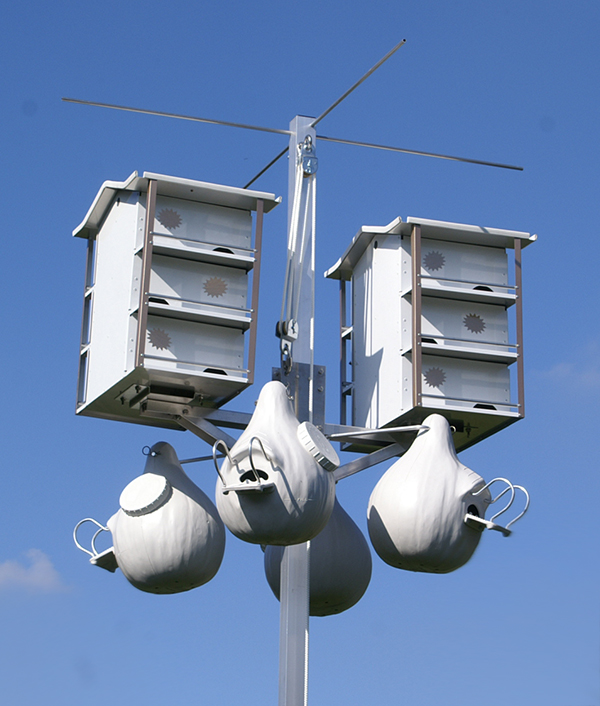
The first problem I encountered is that the martins were nowhere in sight! When the weather is very cold (and windy), the martins often stay inside the housing. This poses a problem, because the martins need to see the crickets whiz by in order to catch on and start going after them. Therefore, in order to get them to perch outside the housing (either on the top perches, telephone lines, TV antenna, etc…), it is sometimes necessary to force them out by lowering the housing and temporarily leaving it in the down position. They will usually fly around for a while then come back and perch on the top perch or nearest available wire/perch. This is what I did today, and it worked well. Caution: If you force your martins out of their housing during cold weather, be prepared with crickets and slingshot, and be committed to persisting in your cricket feeding attempt. Otherwise, you will have done more harm than good by forcing them to expend valuable energy.

After flinging several dozen crickets very high (15-20 ft. with a slingshot) in front of and past the perching martins, a few martins started to go after them. Within 20 minutes, the others had caught on and were zipping around snagging up the crickets. After a while, they would just wait for me to throw them and they didn’t need to be thrown very high. Great fun! We went through at least a couple hundred crickets. It seems like an adult martin that hasn’t eaten for several days can put away about 20-25 (big) six week old crickets!

When the martins are full, they’ll just stop going after the tossed crickets. Ours took off and disappeared for a while. The sun had come out, and although it was still very cold and windy, it seemed as if these martins, their bellies now full, just wanted to go out for a quick "once-around the lake" and enjoy the sunshine. I raised the houses and headed back to the office as they trickled back in.

It is very to become frustrated when attempting to feed your martins for the first time. Your hands will be cold and you will get some cricket "splatter" on your coat from the misfired crickets. (It will take a while to learn how to fire the crickets most effectively with your slingshot.) You will think "This will never work!" and want to go inside. But if the weather is bad and the martins are desperate, they will eventually catch on. You may need to "waste" one or two dozen crickets before the first few martins get the idea and start going after them, but then the rest learn quickly, and they remember very well after that. (You do not need to re-train them every day; they will fly out and catch the crickets immediately the next day, assuming the weather is still poor.)

I had the opportunity to try the emergency feeding technique at a small, "untrained" colony site about 80 miles south of Edinboro a few days later. The weather was still cool and rainy, as it had been all week. The martins were just sitting on the houses and phone lines. I began to fire crickets high into the air with a slingshot, and I had to sling about 20 crickets (one at a time) before one ASY-F martin caught on and snagged it as she wheeled past. Soon after, other martins began going after them, and more than half of the ten martins present took part in the cricket feeding.

For best results, monitor the weather predictions closely in the early spring and be prepared to feed crickets before the martins are so weak that they can't fly.

This video clip (.avi file) in the upper left corner may take about 5 minutes to load. You need a PC running windows. The clip is of me feeding crickets to the PMCA martins last season. It takes about 5 minutes to load with a 56K modem. I want to stress that these martins were already "trained", which is why they were jumping off their perches as soon as they saw my arm go up, and flew down to snatch the crickets, which weren't being tossed very high. To train them, I had to fire crickets very high with a slingshot, right across their line of sight, and I had to sling a couple dozen before even one or two caught on. So it takes patience, and they have to be pretty darn hungry. I would encourage anyone who is considering feeding crickets to their martins to thoroughly read these other two articles as well:

http://www.purplemartin.org/update/9(4)crickettoss.html
http://purplemartin.org/forumarchives/archive/CricketTossing.htm

Ken Kostka, PMCA

Back to Archives